For generations, the vacation home represented a temporary escape. Owners arrived for a holiday, a long weekend, or a predictable season before returning to the routines of their primary residence.
Today, many luxury buyers are looking beyond properties intended primarily for occasional visits. They are considering residences that can support longer stays, greater flexibility, and a more complete way of living. Instead of asking only where they would like to vacation, they are asking where they could comfortably establish a meaningful rhythm for several weeks, several months, or potentially throughout the year.
This is the shift from vacation home ownership to resort-style residency.
A resort-style residence still provides the sense of escape that draws buyers to a second home. The difference is that it also offers the space, services, amenities, and community needed to support everyday life.
How Traditional Vacation Home Ownership Worked
The traditional vacation home was often selected for a specific purpose. It might have been a winter retreat, a summer destination, or a gathering place used for holidays and family trips.
Because visits were relatively short, the home did not always need to support the full range of an owner’s daily life. The location, climate, view, and proximity to a favorite activity might have mattered more than storage, long-term comfort, residential services, or opportunities to build a local routine.
Ownership also came with responsibilities that existed regardless of how frequently the home was occupied. Someone still needed to oversee maintenance, prepare the property before arrival, coordinate deliveries, and address issues while the owner was away.
For an occasional visit, those responsibilities may have seemed like a reasonable part of second-home ownership. As buyers begin spending more time in their residences, however, convenience and operational support become much more important.
What Is Resort-Style Residency?
Resort-style residency combines the privacy and permanence of homeownership with the services, amenities, and social opportunities typically associated with an exceptional resort.
This does not mean the home must become an owner’s full-time residence. Resort-style residency may take several forms:
- Spending an entire season in the residence rather than taking a brief vacation
- Dividing the year more evenly between two homes
- Extending visits as work and personal schedules allow
- Using the residence as a gathering place for children and grandchildren
- Transitioning gradually from seasonal ownership to primary residency
What distinguishes this model is the residence’s ability to support each of these possibilities.
A well-planned resort-style community allows owners to maintain familiar routines while gaining easier access to recreation, wellness, dining, service, and social connection. Instead of placing everyday life on hold during a visit, residents can continue living it in a setting they have intentionally chosen.
Why Luxury Buyers Are Spending More Time in Their Second Homes
The growing interest in resort-style residency is not driven by a single trend. It reflects several changes in how buyers think about time, homeownership, and quality of life.
Greater Flexibility Between Residences
For many owners, the distinction between a primary home and a vacation home is becoming less rigid.
Retirees may spend longer periods in a warmer climate. Entrepreneurs and executives may have more flexibility in where they manage their responsibilities. Families may coordinate extended visits around school calendars and holidays. Others may simply decide that there is no reason to limit time in a favorite location to a few weeks each year.
As schedules become more flexible, buyers need residences that can accommodate real routines rather than only short stays.
A Preference for Simpler Ownership
Maintaining multiple properties can require significant coordination. The more time an owner spends at a second residence, the more noticeable the operational demands become.
Resort-style residency responds to this challenge by placing greater emphasis on professional support. Services may assist with property oversight, arrival preparation, deliveries, reservations, transportation, and other details that would otherwise fall to the homeowner.
At The Ritz-Carlton Residences, Estero Bay, The Experience Studio is designed as a dedicated residential hospitality and lifestyle resource for owners. Its à la carte offerings can support residents during their stay and help oversee the property when they are away.
More Value Placed on Everyday Experience
A vacation itinerary often centers on a few planned activities. Resort-style residency allows recreation, wellness, dining, and time outdoors to become part of an ordinary week.
The difference is subtle but meaningful. A morning on the water does not need to be treated as a special excursion. Dinner with friends does not require extensive coordination. Time for fitness, relaxation, or social connection does not have to compete with a long list of logistics.
The value of the residence begins to come not only from major occasions, but also from the quality of everyday life.
Vacation Home Versus Resort-Style Residence
Although the terms are sometimes used interchangeably, a vacation home and a resort-style residence are evaluated differently.
|
Traditional Vacation Home |
Resort-Style Residence |
|
Primarily intended for periodic visits |
Supports seasonal, extended, or year-round living |
|
Selected mainly for destination and climate |
Evaluated as a complete residential environment |
|
Recreation may require additional travel and planning |
Recreation and wellness are integrated into the lifestyle |
|
Owners coordinate much of the property upkeep |
Professional services can simplify ownership |
|
Designed around temporary stays |
Designed to support everyday routines |
|
Social activity may depend on existing relationships |
Shared spaces and programming can encourage connection |
Neither type of ownership is inherently better. The right choice depends on what the buyer expects the property to provide.
A residence used for a few weeks each year may not need to accommodate every aspect of daily living. A home used for several months at a time should be considered through a wider lens.
A Residence Must Work Beyond the Vacation Week
A beautiful view may shape a buyer’s first impression, but a home intended for extended residency must also perform well on an ordinary Tuesday.
That means evaluating how the floor plan and living spaces support daily use.
Buyers considering a home for longer stays should ask:
- Does the residence provide sufficient privacy for owners and guests?
- Is there enough storage for clothing, personal belongings, hobbies, and household necessities?
- Can the kitchen support regular use as well as entertaining?
- Are outdoor areas functional extensions of the home?
- Does the floor plan accommodate visiting family without compromising the owner’s routine?
- Is there space for reading, working, exercising, or pursuing personal interests?
- Will the home remain comfortable after the novelty of a vacation has passed?
These questions reflect an important change in mindset. Buyers are no longer evaluating the property exclusively as an escape. They are considering whether it can support the full texture of residential life.
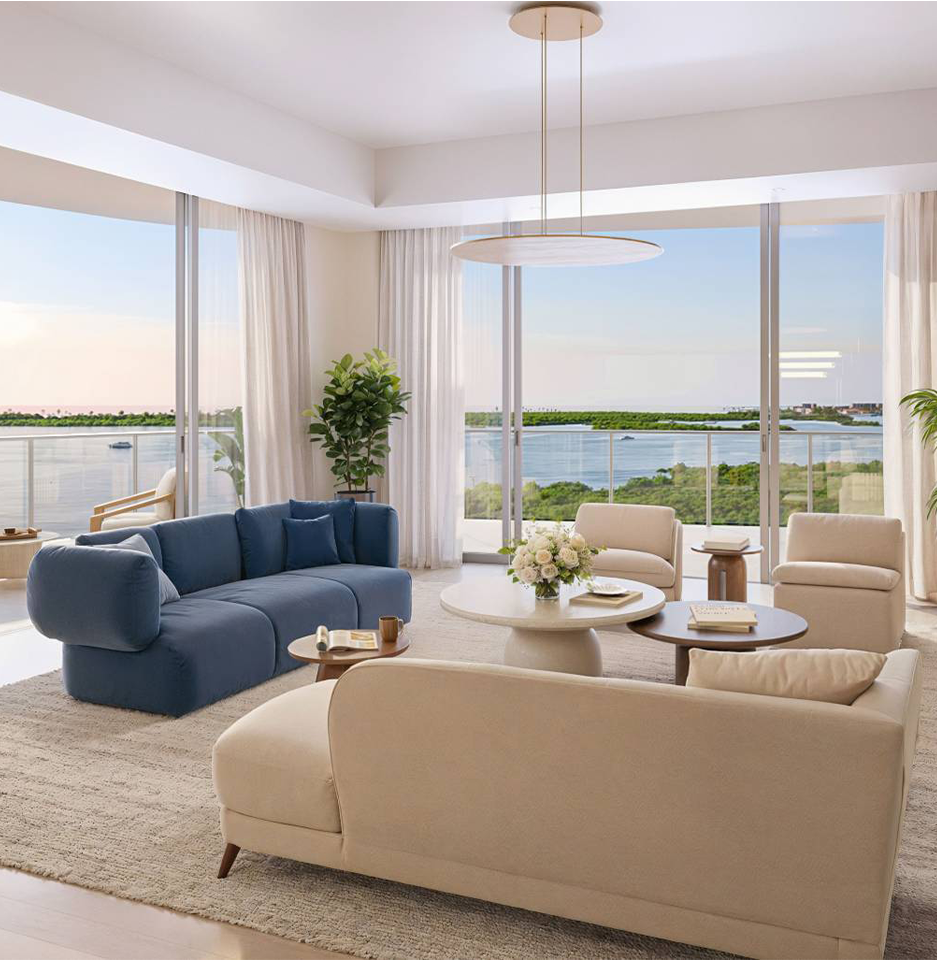
At The Ritz-Carlton Residences, Estero Bay, two-, three-, and four-bedroom floor plans range from approximately 2,600 to more than 3,800 square feet. Residences include private elevator entries, expansive living areas, and large terraces that extend the usable living environment outdoors.
Community Matters More During Extended Stays
A brief vacation can be filled with planned dinners, family gatherings, and scheduled activities. During a longer stay, the surrounding community begins to play a more meaningful role.
Owners may want privacy within their homes while still having opportunities to connect with neighbors. Shared gathering spaces, dining experiences, wellness programming, and recreational activities can make those connections feel natural rather than forced.
This sense of community becomes particularly valuable for seasonal residents. Returning to a familiar setting with recognizable faces and established routines can make each arrival feel less like checking into a destination and more like coming home.
The most successful resort-style communities provide both possibilities:
Residents can retreat into the privacy of their homes or participate in the community whenever they choose.
That balance distinguishes true residency from a temporary resort experience.
Hospitality Becomes Part of the Home
Traditional hospitality is associated with a limited stay. Guests arrive, receive attentive service, and depart at the end of the visit.
Within a branded residential community, hospitality serves an ongoing purpose.
Residential service may help prepare a home before the owner arrives, coordinate everyday requests while they are in residence, and oversee certain needs after they leave. The goal is not to make the residence feel like a hotel room. It is to make homeownership more intuitive and less demanding.
This distinction is especially important for people who divide their time among multiple residences. Arriving should not mean spending the first several days restocking the home, resolving maintenance concerns, and rebuilding a routine.
Instead, the transition can feel more seamless.
At The Ritz Carlton Residence, Estero Bay, The Experience Studio offers personalized services that may include grocery stocking, in-residence delivery coordination, property watch, wellness arrangements, boating assistance, and other lifestyle support.
The result is a form of hospitality designed around ownership, continuity, and familiarity.
How Resort-Style Residency Changes the Buying Decision
When purchasing a traditional vacation home, a buyer might ask, “Would I enjoy spending time here?”
When evaluating a resort-style residence, the questions become more specific:
- Could I live comfortably here for several months?
- Does the residence support quiet mornings as well as larger gatherings?
- What services are available before, during, and after my stay?
- Can I access the activities I enjoy without extensive travel or planning?
- Does the community offer enough variety to remain engaging over time?
- Are there opportunities to build meaningful relationships?
- Can the home adapt as my lifestyle and priorities change?
- Would I still choose this property if I began spending more time here than originally planned?
These questions help buyers look beyond the initial appeal of the destination. They reveal whether the property can remain valuable as the owner’s relationship with it evolves.
Resort-Style Residency at The Ritz-Carlton Residences, Estero Bay
The residences are located within Saltleaf on Estero Bay, a 500-acre coastal village designed to bring together waterfront living, recreation, dining, wellness, and nature. The two residential towers offer access to indoor and outdoor amenity environments, including wellness spaces, resident lounges, private dining settings, pools, and recreational areas.
Nearby, Saltleaf Marina and Saltleaf Golf Preserve add opportunities for boating and golf within the surrounding community. The property is also positioned beside the protected environment of the Estero Bay Aquatic Preserve.
Frequently Asked Questions
What is the difference between a vacation home and a resort-style residence?
A vacation home is generally intended for periodic visits, while a resort-style residence combines private homeownership with services, amenities, and community features that can support seasonal, extended, or year-round living.
Can a resort-style residence become a primary home?
Yes. Some owners purchase resort-style residences as second homes and later choose to spend more time there. The floor plan, property services, community, and access to everyday conveniences should all be considered when evaluating the residence for full-time use.
Why are luxury buyers spending longer periods in their second homes?
Greater schedule flexibility, access to residential services, integrated recreation, warmer climates, and a preference for simpler homeownership can make longer stays more practical and appealing.
What should buyers consider when purchasing a home for extended stays?
Buyers should consider storage, privacy, guest accommodations, everyday functionality, property management, residential services, dining, wellness, recreation, and opportunities for social connection.
How is branded residential service different from hotel service?
Hotel service is structured around a temporary visit. Branded residential service supports the ongoing needs of homeowners, including requests during their stay and certain property needs before arrival or while they are away.
Is resort-style residency only for retirees?
No. Resort-style residences may appeal to retirees, working professionals, entrepreneurs, families, and anyone seeking greater flexibility between multiple homes. The model is defined by how the residence supports daily life, not by the age or employment status of its owners.
A home can begin as a seasonal retreat and become the setting for a much fuller way of life.
At The Ritz-Carlton Residences, Estero Bay, private waterfront residences, personalized service, wellness, recreation, dining, and an extraordinary natural setting come together to support an elevated approach to everyday living.
Schedule a private appointment to explore the residences and discover what resort-style residency can mean for your next chapter.